
My Vet School Experience
- Anabella Schuman

- May 21, 2024
- 16 min read
Updated: Jun 10, 2024

Starting Vet School During a Global Pandemic!
My vet school experience was unique because, as the graduating class of 2024, we started vet school in 2020 during a global pandemic, which posed a multitude of challenges.
My first year experience and advice for first year vet students:
When I started vet school, Tufts was requiring all students to be COVID tested 1-2 times each week. All lectures were online via Zoom and only important labs (anatomy lab and clinical skills) were in person. They tried to keep us all in the same small groups so that we weren’t mingling with too many different students. I understood the purpose in regard to decreasing risk of disease exposure/ spread, but it was disappointing to be the first vet school class to not even know a quarter of my classmates. I found that it made it harder to make friends and socialize with students aside from my 3 roommates.


In college, all of my roommates had different majors, so we all just supported each other in our different areas of interest. I went to such a big college (Penn State) that it always felt like there were new clubs to join and new people to meet. Vet school felt a little more like high school: being in a class of about 100 people, gossip spreading throughout the whole class, and a quick formation of cliques. In vet school, everyone is taking the same classes and the same exams at the same time for the first 3 years. It can be very hard not to compare yourself to others. My biggest piece of advice is do not ask people their grades and do not share yours when not asked. If you announce that you did really well on an exam, then you might seem braggy and make others feel bad. If you find out that other people did better than you on an exam, then you might feel insecure or not good enough. It’s a lose-lose situation. I think if I had been closer to my roommates, it would have helped make vet school more enjoyable. I picked random roommates through Facebook, and we got along well as roommates. They are nice people and smart students and I have nothging against them, but unfortunately we just didn’t have much in common and didn't become close friends.
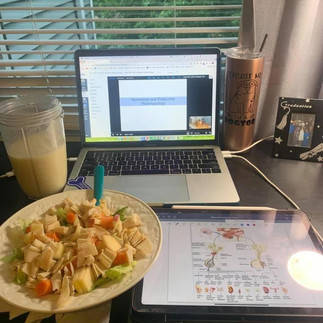
One advantage to having online classes was that it cut out any commute time to school, so I was able to walk my dog every lunch break and fit in a decent amount of at-home work outs! It was always a priority to me to have a healthy work-life balance. I tried to make at least an hour a day to put down the study material to do something enjoyable for myself: hang out with a friend, walk my dog, exercise, cook a meal, watch a Netflix show, etc. I always tried to take Friday nights and Saturdays off from studying if I could.
I joined class council as the social chair my first year. It was a challenge to plan socials that would be fun over zoom, but we definitely tried our best, and I formed a friendship with my co-social chair! I didn’t want to start working my first semester of vet school because I wanted to focus on studying and evaluate my time management capabilities before I added anything else to my plate. After my first semester, I realized that I did have time for a part time job. Since our hands-on experience was very limited my first year due to COVID, it was especially important for me to make time for gaining hands-on experience with animals. I started working as a veterinary assistant at a local general practice during my second semester and continued throughout the summer and the following semesters until I became too busy to work during my fourth year.

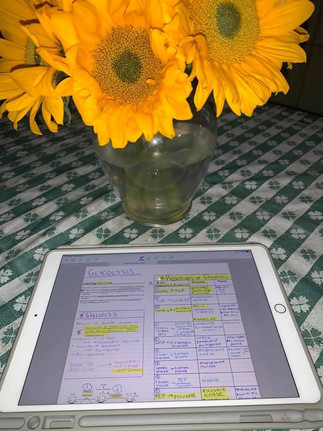


As far as classes went, many students struggled to learn well over zoom. I personally have always been very self motivated, so I don’t remember struggling too much first year (aside from when my iPad crashed and I lost all my notes first year, that was traumatizing!!) I do remember finding the classes less interesting because first year was focused on building a general science-based knowledge and it didn’t feel as clinically applicable. But I do remember loving anatomy my first year since it was our only in-person class and I am a visual, hands-on learner so I loved learning through active dissection! For most exams throughout vet school, i studied by taking notes during the lectures, making a visual study guide with the most important information on my iPad, creating a quizlet with questions drawn from the learning objectives, then reading over my study guide and going through my quizlet practice questions until the exam. Since i am a visual learner, study guides were very helpful for me, but I also felt like the active recall of the quizlet questions helped it stick in my brain.
Some of the first year classes included:
Biochemistry
Human-Animal relationships
Clinical Skills
Problem-based learning
Nutrition
Immunology
Pathology
Communications
What to expect for your second and third year of vet school:
Second and third year were similar in my personal experience. I still chose to attend most lectures online, but the option to attend in person became available. More and more labs were being held in person and it felt like classes became progressively more clinically relevant, especially during third year, so they became much more interesting. Second year second semester was challenging for me because we had cardiology and neurology classes at the same time, and both were challenging in my opinion and required me to dedicate extra study time to them.
COVID restrictions gradually started to become lifted and more opportunities were opening up on campus, so I did a selective in the Tufts small animal ER on Tuesday afternoons to start getting experience in the Tufts animal hospitals.


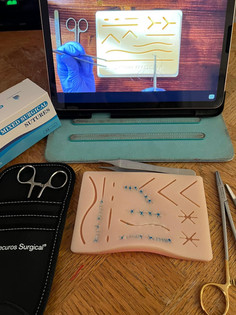


I loved spay week my third year! I was very scared leading up to it. For 2-4 weeks leading up to it, I spent all my spare time watching canine spay videos and practicing suture patterns at home. But it was my favorite pre-clinical experience of vet school! We each got to spay two dogs under veterinary supervision. My confidence grew tremendously between my first and second surgery days, and I fell in love with surgery!



Second year courses:
Infectious diseases
Microbiology
Parasitology
Respiratory pathology
Urinary pathophysiology
Endocrine pathophysiology
Neurobiology
Cardiovascular pathophysiology
Gastrointestinal pathophysiology
Reproductive pathophysiology
Skeletal pathobiology
Toxicology
Pharmacology
Zoological Medicine
Diagnostic imaging
Ethics
Third year courses:
Small animal medicine and surgery
Theriogenology
Anesthesia and analgesia
Dermatology
Clinical reasoning
Diagnostic ultrasonography
Equine and camelid medicine and surgery
farm animal medicine and surgery
Ophthalmology
Small animal dentistry
Clinical animal behavior
Euthanasia seminar
Veterinary economics
Fourth Year: Clinical Rotations
I could talk about clinics forever. It was the most challenging, educational, stressful, exciting, depressing, skill-building, and rewarding experience of all of vet school. It was a very unique year and a half compared to pre-clinical years. I went into detailed reviews of each clinical rotation on my Instagram (@DogtorBella) throughout 2023 and 2024, but I will try to summarize my overall thoughts here. I will separate my clinical experience into three separate blocks. Of course, clinical year kicks off with your white coat ceremony in March to mark your transition from in-classroom learning to in-hospital learning!


1)The start of clinics: March-June 2023
This was a big adjustment period. I went from being able to watch lectures from home most days and walk my dog/ go to the gym easily around my class times to being at Tufts Animals Hospitals from 6:30am-6:30pm six to seven days a week for many rotations. I got a dog walker to start coming once a week at lunch time to help make sure my dog was still getting enough exercise.
But this was an exciting time because I no longer had to study for an exam every Friday like I had been for the last 3 years of vet school! Even though I was working long hours, once I was off of clinics, I could relax and didn’t need to worry about studying! However, I did spend lots of time outside of clinics working on paperwork since I was just starting to get the hang of writing SOAPs and discharges. I was also spending time preparing for my upcoming cases in my rotations.
I was nervous about being evaluated by the doctors, but throughout clinics I realized that the doctors do not expect you to know everything! What’s most important is that you show up on time, demonstrate that you are putting in an effort, show interest in the cases, be willing to learn, and take care of your patients.


As far as scheduling your clinical rotations, I tried to structure my schedule so that I was taking NAVLE-relevant rotations prior to November. Vet students typically take the NAVLE about half way through their clinical year, so you won’t have all of the rotations under your belt yet. Some rotations that I felt helped prepare me for the NAVLE are:
the specialty block (cardiology, neurology, oncology, etc)
Pathology
Small animal internal medicine
Large animal medicine
The way that Tufts does their scheduling is that we have a certain amount of EV weeks built in, which can be a certain amount of Vacation weeks and the rest need to be Elective weeks. I would recommend dividing yours up as follows:
use most of your elective weeks in the first half of clinics to spend time in your area of interest (ie I knew I wanted to work in a small animal GP in Boston after graduation so I used most of these elective weeks to extern at various places around Boston that I thought might be a good-fit for a post-grad job)
Use an elective week in November-December as a “vacation” to get a week off from clinics purely dedicated to last-minute NAVLE review then take your exam at the end of the week! This helped me feel so much more confident going into my boards exam!
Use your elective weeks towards the end of your clinical year to build your skills! If you already have a job at this point, you can do whatever you want with these weeks! I wanted to build my surgical skills, so I did the Tufts spay and neuter clinic, which was an incredible experience. I used one week to extern at a clinic where I grew up to spend time with my family. I used two weeks to shadow at my place of work to become more familiar with the flow before i start working. And i used two weeks right before graduation to do online elective so i could relax leading up to graduation!
Also save 1-2 weeks at the end if you need to do any make-up rotations. I had to make up two weeks (one for being sick and one for a death in my family.) if you end up not needing them, you can fill them with something fun later!
2) NAVLE Time: July 2023-December 2023
This was definitely the most stressful part of vet school for me! On top of working (i call it "working" because it was freaking hard work but really we are not getting paid, we are actually paying a lot of money to be there!) crazy hours for clinical rotations, I was also trying to add Vet Prep study time to my plate! I went into a whole separate blog post on specific NAVLE study tips, so I’ll try not to repeat it here. But i was studying at a cafe for 5-7 hours every Sunday for 3-4 months leading up to my November NAVLE boards exam date. I also tried to study for 1-2 hours during the week at least one or two days a week when I got home from clinics.


Which clinical rotation you’re on definitely impacts how much study time you’ll have, so you have to accept that on long clinical rotations, you’ll be too tired to put in a lot of study hours, so try to put in extra study time during rotations with less demanding hours. I was exercising less than I ever had, I had almost zero social battery from how exhausted I was so I wasn't spending time with friends, and my grandma unexpectedly passed away two weeks before my scheduled NAVLE exam date. My mental health felt like it was at an all-time low. I spent Thanksgiving alone to study for my NAVLE and took my NAVLE the Saturday after Thanksgiving, then my parents came up to take me out to dinner that night after I finished my exam.
I also forgot to mention that around October, I started emailing clinics I had externed at with an updated resumé to see if they had any positions for new grad-vets starting next summer. I emailed several other clinics around Boston as well that I had looked up their websites and seemed like they would be a good fit. I immediately ruled out one-doctor practices since I knew I wanted to learn from several different vets. I did phone interviews with about 5 different practices during this time and narrowed it down to my top 3. I scheduled in-person interviews for January since I knew I would have more time after my NAVLE. I also knew I wanted to do working interviews to spend at least 1-2 full days at each clinic I was interested in to get to know several of the doctors and get a feel for the flow so I could see if it would be a good fit.
I can do a whole separate blog post of what to look for in your first job but here are some things you may want to consider:
How many doctors work at the practice?
What kind of mentorship does the practice plan to offer for a new-grad to transition from student to doctor? Have they hired new-grad vets previously?
What is the tech to doctor ratio?
Does the practice have good retention of doctors and support staff?
Does the company offer employee benefits, 401K, continuing education, etc?
What are the hours like (hours per shift, days per week, weekends, nights, on-call, holidays, etc)?
Does the practice offer soft tissue surgeries, dental radiographs, ultrasound, echo, etc?
3)Wrapping up clinics: January-May 2024
I’ll do the negatives first before I get into the positives! I was definitely unlucky in my clinical rotations schedule where I spent Thanksgiving studying for the NAVLE, Christmas on call, and New Year’s Eve on call. I’m lucky that my parents and my boyfriend's family were generous enough to all come to MA to spend Christmas with us, but it was definitely frustrating to not have freedom over my schedule to go home for any holidays. I also became sick with cryptosporidium from working with cows on my ambulatory rotation and had to miss out on visiting some of my closest friends. I felt very isolated many days, but i am so thankful for my parents, boyfriend, friends and dog for being flexible with me and keeping me sane during my clinical year!


One final stressor during clinical year can be the decision of going straight into practice vs doing an internship year. Transparently, I’m not the person to ask because I was always 99% I wanted to go straight into GP. My main advice would be do not look down on someone because they are choosing one path over the other. Everyone has a different journey to their goals, and that doesn’t mean one way is right and one way is wrong. I wanted to go straight into GP because I have no desire to ever specialize. I am also ready to start making a real salary and have a better work-life balance. I also realized that most of the cases I saw at Tufts throughout my clinical year had already been worked up by a GP and came to the Tufts specialists with a diagnosis. In order to learn how GPs did the initial work up, I wanted to get out in the real world and start learning from GPs! If there’s even a 50% chance you may want to specialize eventually, i would recommend talking to other veterinarians/ vet students about the internships application process! One great part of clinics is that you get exposed to so many different specialties so if you’re not sure what your main career aspirations are, clinics can help you figure it out! See which rotations you enjoy the most!
Let’s get into the highlights! In January of 2024, I was on vacation in Puerto Rico with my parents when I found out I passed my NAVLE! It was the biggest wave of relief! I had felt so certain that I failed. It was such a tricky exam, and I was not in the best head space with the recent passing of my grandmother. I was so proud of myself that I had pushed through all of the obstacles and passed on my first try, and I was ecstatic to know that I wouldn’t have to go back to the dark time where I was spending all of my spare time going through vet prep!
My biggest piece of advice during this time is DO NOT ASK YOUR PEERS IF THEY PASSED THE NAVLE!!! They will share with you or post on social media if they choose, but I can only imagine how hard it is to be asked about your exam scores and watch the majority of your peers celebrating around you while knowing that you did not pass your NAVLE. I’ve said this before and I will say it again, but i truly do not think the number of times it takes for you to pass the NAVLE has any correlation with how good of a vet you will be. The NAVLE is all about memorization and test taking abilities. So refrain from judging your classmates or yourself if you need to retake this challenging 8 hour exam!
The last few months of clinics were my absolute favorite! I had secured my post-grad job position and passed my NAVLE, so I could spend any free time outside of clinics enjoying myself! I got to create my own schedule for a good chunk of it, and filled my time with useful, small animal related electives that I knew would help me in my career. The best part of clinical year compared to the pre-clincal years is that you are getting hands-on experience with real patients, owners, and doctors every single day! You are finally doing what you've dreamed of doing: being a part of the medical team that is working hard to save sick and injured animals! I faced sad cases that unexpectedly took a turn for the worse, but I also got to see animals with only a small chance of surviving receive amazing veterinary care and make a miraculous recovery and get to go home to their families! I believe that I learned more during my year and a half of clinical rotations than I did my first three years of lectures combined because I was learning from hands-on case experience. It really helped prepare me to enter the working world as a doctor, so take every opportunity you can during clinics and get as much hands-on experience as you can! Don't be afraid of making a mistake; be afraid of never having the courage to try.
After graduation
Graduating from vet school is a surreal experience! This little girl who loved animals and wrote down in kindergarten that she dreamed of becoming a vet had no clue how much time, sweat, tears, and student loan debt her dream job would require, but she pushed through all of the hardships and never gave up until she made that dream a reality! After vet school, please take at least 4-8 weeks off if your job allows for it. You DESERVE time to relax, see friends and family, travel, and do things you weren’t able to do for the last year and a half during a demanding clinics schedule! Additionally, I am using my time to apply for my state veterinary license, controlled substance license, and DEA license before I start practicing.




Overall Reflection
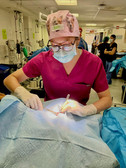
Vet school was a challenging but rewarding and life-changing period of my life. I had to sacrifice more time and money than I ever expected. I missed out on many events with friends and family, but it was worth it to pursue my dream job. I know all of the sacrifices will be worth it to get to help animals every day for the rest of my life. I learned so much throughout these last 4 years, both in veterinary medicine and in my personal growth. I couldn’t have done it without the support of my friends and family. I also met the love of my life during my first year of vet school who just so happened to be one of the engineers working on the HVAC system of the anatomy lab, and now we live together with our dog in Boston, where we have formed our own little circle of friends. Next month, I will get to start walking to work every day and seeing my own patients as Dr. Bella Schuman, DVM! I know that the veterinary profession requires life-long learning, and I am excited to contiue learning from the amazing veterinarians at my place of work. I truly believe vet school brought me to exactly where I am meant to be right now in my life, and I can’t wait to keep exploring the amazing city of Boston, meeting pet owners, and getting to help lots of city pets!
Is vet school the right choice for you?
Vet school is HARD! You will graduate with hundreds of thousands of dollars worth of debt. You have to make many personal sacrifices to get through it. If you are not sure this is the right career path for you, then I honestly would not do it. That being said, if you are certain that being a veterinarian is your dream job, then it is 100% the right choice for you! If you will do whatever it takes to get through all the obstacles because you know your life’s goal is to make the planet better one animal at a time, then don’t give up! Vet school is worth it because I always knew I would be a million times happier working with animals every day rather than sitting behind a computer screen every day. My friends with business majors have their own advantages: they can work from home some days, they get off for every holiday, they have much less student debt, and they never have to work nights or weekends! But I get to help animals every day and put a smile on their humans’ faces, and I wouldn’t change that for the world!
Be kind to your veterinarian please! *MENTAL HEALTH TRIGGER WARNING
Many people don’t realize that one in six veterinarians have had suicidal thoughts. It is one of the professions with one of the highest suicide rates. When clients are frustrated with a very sick beloved pet (which is understandable) they often take it out on their veterinarians (which is often unfair). I’ve witness clients accusing veterinarians of “only being in it for the money” but I’ve never met anyone in the veterinary field who is in the profession for the money! If you’ve gotten this far in my blog post, you’ve realized how hard it is to become a veterinarian. And veterinarians are smart! Most vet schools have less than a 10% acceptance rate (at least in 2020 when I was applying). If we were motivated by money, there are many other high paying careers with a lot less student debt that we could have pursued.
We pursue a job in the veterinary field because we love animals! Veterinary care is expensive (please invest in pet insurance as soon as you get a new puppy or kitten), and we understand that it can be frustrating. But please do not take it out on your veterinary staff! We are here to help you and your pet to the best of our ability. That is the only thing getting us through the hard days is knowing that we chose a career path where we can make a difference in people’s lives by helping their animals! So please be kind. You never know what someone else is going through.
I hope this blog post helps any and all vet studeudents! I will continue to document my journey as a new-grad vet on here and on my vet instagram (@DogtorBella). Feel free to message me if you have any questions! Good luck in vet schol!! And always remember, you were strong enoough to make it through all the hard days so far. You didn't come this far just to come this far. Keep pushing until your goal becomes your reality!


Comments